
Philippines staffing research
Promise-to-Pay Research: Did the Collections Queue Record a Commitment or an Assumption?
A communication cohort for testing the source, terms, authority, follow-up, and outcome of recorded payment commitments.
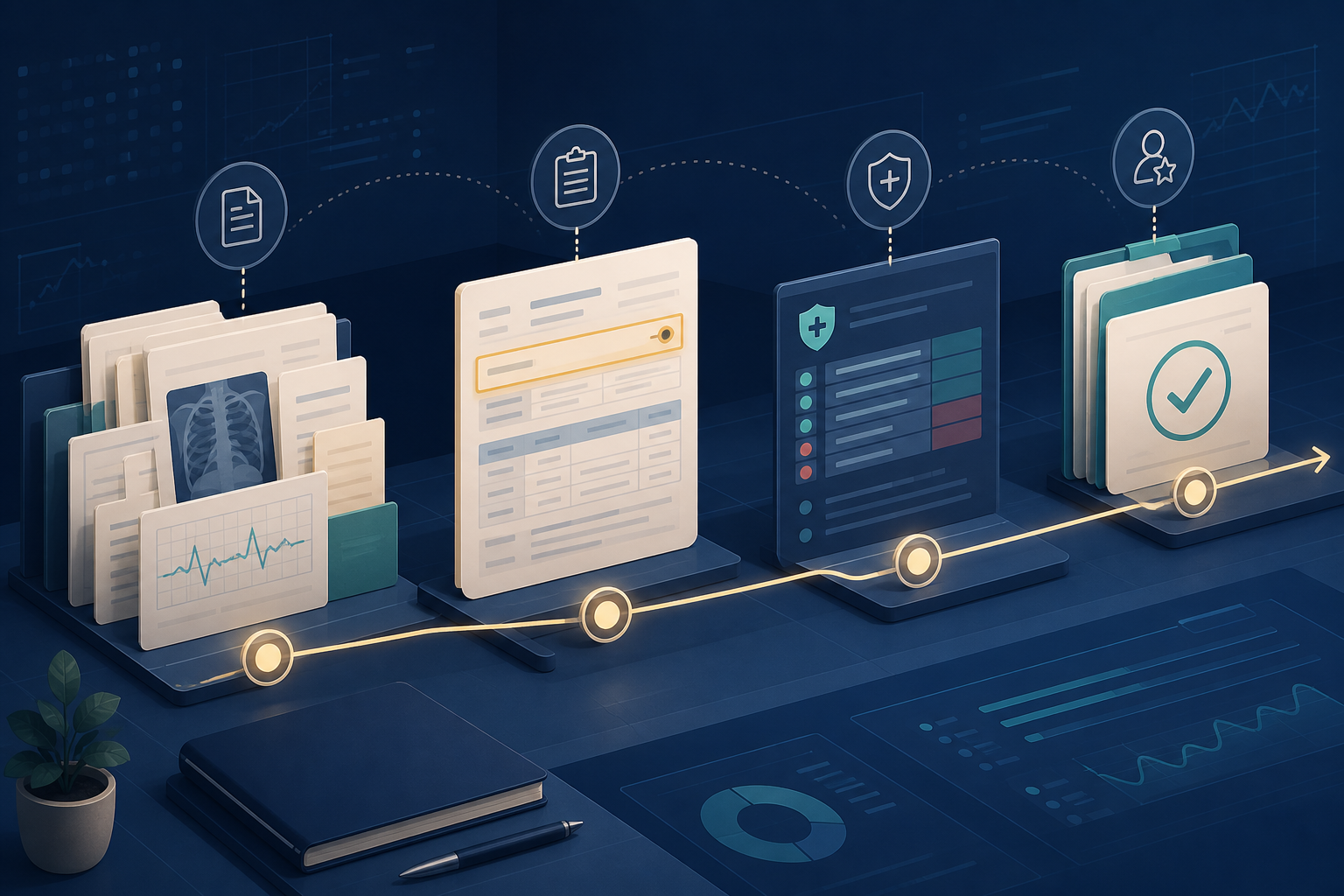
Research question. When a billing queue records a promise to pay, does the record show who made the statement, the exact amount and date, the communication source, and any authority limits that affect follow-up? The buyer decision is whether collections follow-up records support safe routing and forecasting without allowing a specialist to invent terms or make unauthorized commitments. This article presents a research design, not a claim about results. It separates observed records, calculations, interpretations, and unresolved facts so a buyer can judge the evidence without confusing a plausible explanation with a measured cause.
Why the question belongs in outsourced billing research. Delegation changes who prepares the record, not who owns the business decision. A Philippines-based billing specialist may organize evidence, reproduce documented arithmetic, maintain a queue, and prepare an exception question. The buyer still controls contracts, accounting positions, legal and privacy decisions, balance changes, customer commitments, final release, and sign-off. Research should test whether that boundary is visible in daily work.
Unit of analysis. Use one recorded payment commitment tied to one account, one communication event, and one stated amount or payment action. Give the unit a stable, privacy-safe identifier. Link corrected, reopened, or replaced versions rather than overwriting the earlier state. Do not change the unit midway through analysis by mixing accounts, invoices, messages, batches, people, and events in one rate. If grouped items are necessary, document the grouping rule and retain the members.
Population and cutoff. Include every record assigned a promise, commitment, payment-plan, callback, disputed, or equivalent status during the window, including later edits, broken promises, partial payments, duplicate contacts, third-party statements, inaccessible recordings, and records reversed after review. Freeze the observation window, systems, reports, filters, timezone, extraction time, duplicate rule, and cutoff before classification. Keep a count of records that cannot be accessed. After-cutoff arrivals and decisions belong in a movement log. They may explain the final state, but they must not quietly alter the opening population used to calculate results.
Evidence record. Capture account and invoice locator; communication date, channel, and participants; authentication or authority state; exact customer statement or approved structured capture; amount; currency; promised date; payment method only where collection and storage are authorized; conditions; dispute indicators; collector notes; next action; owner; later payment match; edit history; and disposition. Use the minimum sensitive detail needed for an authorized reviewer to retrieve the source from an approved system. The study table should contain locators and classifications, not copies of protected records when copies are unnecessary. Mark each field as source-observed, externally reported, calculated, owner-interpreted, or unknown.
Classification. Apply declared states such as specific supported commitment, incomplete commitment, callback only, third-party statement, dispute raised, terms requested, owner approval required, duplicate record, statement conflict, access blocked, paid as stated, partially paid, unpaid at observation cutoff, superseded, and unresolved. Write definitions before looking at the outcome, and keep examples for borderline cases. A queue label is not self-proving. "Approved," "disputed," or "complete" only becomes useful research evidence when the record identifies the event, actor, timestamp, scope, and source that support the label. Preserve conflicts rather than picking the more convenient record.
Method. Start with the frozen population and preserve evidence of the extraction. Normalize identifiers, units, and timestamps in separate fields without replacing source values. Link each unit to its upstream evidence and downstream result. Apply the classification rules. Calculate only from records that contain the required inputs. Review exceptions and boundary cases, then publish counts, denominators, late movements, unknowns, and access exclusions together.
Reproducibility checks. compare structured fields with the preserved communication; distinguish a request, intention, and confirmed commitment; inspect all edits to amount and date; match later receipts without assuming causation; verify that disputed items follow the approved path; review contact timing and channel rules; and have a second reviewer classify ambiguous language independently. A second reviewer should work from the same source locators and written rules, not from the first reviewer's conclusion. Record initial disagreement, the evidence examined, any owner adjudication, and the final rule clarification. If the rule changes after results are visible, label that analysis exploratory and rerun the complete frozen population.
Measures. Report the total population; source-linked units; units with complete required fields; conflicts; duplicates; inaccessible records; owner-pending items; resolved items; and unresolved items. Show each percentage with its numerator and denominator. For elapsed time, name the start and end events, disclose how many units contain both, and publish a median plus a stated upper percentile. Averages alone conceal long waits.
Facts and calculations. Facts are preserved source values, identifiers, versions, statements, and timestamps. Calculations include joins, elapsed intervals, formulas, counts, and reconciliations produced from those facts. Analysis applies a declared classification rule. Inference proposes why a pattern may have occurred. Keep these in separate report columns. A repeated pattern can guide the next investigation, but it does not prove motive or root cause.
Interpretation. A later payment does not prove that a specific follow-up caused it. An unpaid commitment does not establish unwillingness or collector error. The record may show that circumstances changed, that the initial entry was vague, or that a dispute interrupted collection. Forecasting use should disclose the definition, denominator, observation window, and unknown outcomes. Compare results only when population rules, source availability, authority, cutoff, and case mix are reasonably comparable. If one of those conditions changes, segment the result. Do not turn a queue measure into an individual performance score when source quality, access, approvals, and downstream decisions are controlled by other roles.
Uncertainty. Unknown is a reportable result. Use it when a source, version, identifier, timestamp, authority, or final disposition cannot be established. Name the reason: missing evidence, denied access, conflicting records, undefined instructions, or an owner decision still pending. Do not substitute the current screen for historical evidence or fill a gap with the value that makes the reconciliation work.
Access and retention. Give the specialist only the systems and records needed for the assigned step. Separate preparation rights from approval, release, balance-change, and access-administration rights. Log material changes and retain evidence according to the buyer's approved policy and applicable requirements. Remove access when the role changes or ends. Research extracts should avoid sensitive fields that do not serve the stated question.
Decision use. The result can tell a buyer where work stops: intake, source access, instructions, system linkage, preparation, reviewer capacity, or owner judgment. It can support a narrower role design, a required-field change, a better exception code, or a review cadence. It cannot, by itself, establish that outsourcing caused the pattern or that adding headcount will correct it.
Limitations. The legal status of a debt, coverage under collection law, consent, identity, communication restrictions, settlement authority, payment processing, hardship, disputes, jurisdiction, and company policy all affect permissible action. The study is not legal advice and does not authorize contact, terms, fees, credit reporting, or settlement. Selection rules, observation length, source retention, access constraints, system-created timestamps, non-random missing records, and local procedures also limit comparison. This design is not a universal industry benchmark. Outsourced Billing Services does not claim to have run this study for a client, achieved a stated result, or guaranteed an outcome.
Niche conclusion. For a buyer considering outsourced billing support, the useful test is whether prepared work remains traceable and reaches the right owner with uncertainty intact. The proposed population, evidence model, and independent checks make that test reproducible. They also keep the specialist's role practical: prepare, compare, document, and escalate without quietly acquiring authority that belongs to the buyer.
Source method. We reviewed the current publisher pages on September 22, 2026 and used them for control, security, privacy, or regulatory context. They do not supply company performance data and do not prove an outcome for a billing operation. Applicability depends on the buyer's facts and should be evaluated by qualified legal, accounting, compliance, privacy, or security owners where needed.
Debt Collection Practices (Regulation F). Consumer Financial Protection Bureau. https://www.consumerfinance.gov/compliance/compliance-resources/other-applicable-requirements/debt-collection/. Checked September 22, 2026. Used for the regulatory context for covered consumer-debt communications, validation information, disputes, and records.
Standards for Internal Control in the Federal Government: 2025 Revision. U.S. Government Accountability Office. https://www.gao.gov/greenbook. Checked September 22, 2026. Used for the control environment, quality information, documented control activities, and monitoring.
Security and Privacy Controls for Information Systems and Organizations, SP 800-53 Revision 5. National Institute of Standards and Technology. https://csrc.nist.gov/pubs/sp/800/53/r5/upd1/final. Checked September 22, 2026. Used for access control, audit records, information integrity, and separation of duties.
Protecting Personal Information: A Guide for Business. U.S. Federal Trade Commission. https://www.ftc.gov/business-guidance/resources/protecting-personal-information-guide-business. Checked September 22, 2026. Used for mapping sensitive information, limiting access, secure handling, and appropriate disposal.