
Philippines staffing research
Invoice Number Collision Research: Can Each Reference Identify One Released Document?
A namespace study of numbering rules, entity prefixes, resets, migrations, voids, drafts, exports, customer references, and duplicate-looking identifiers.
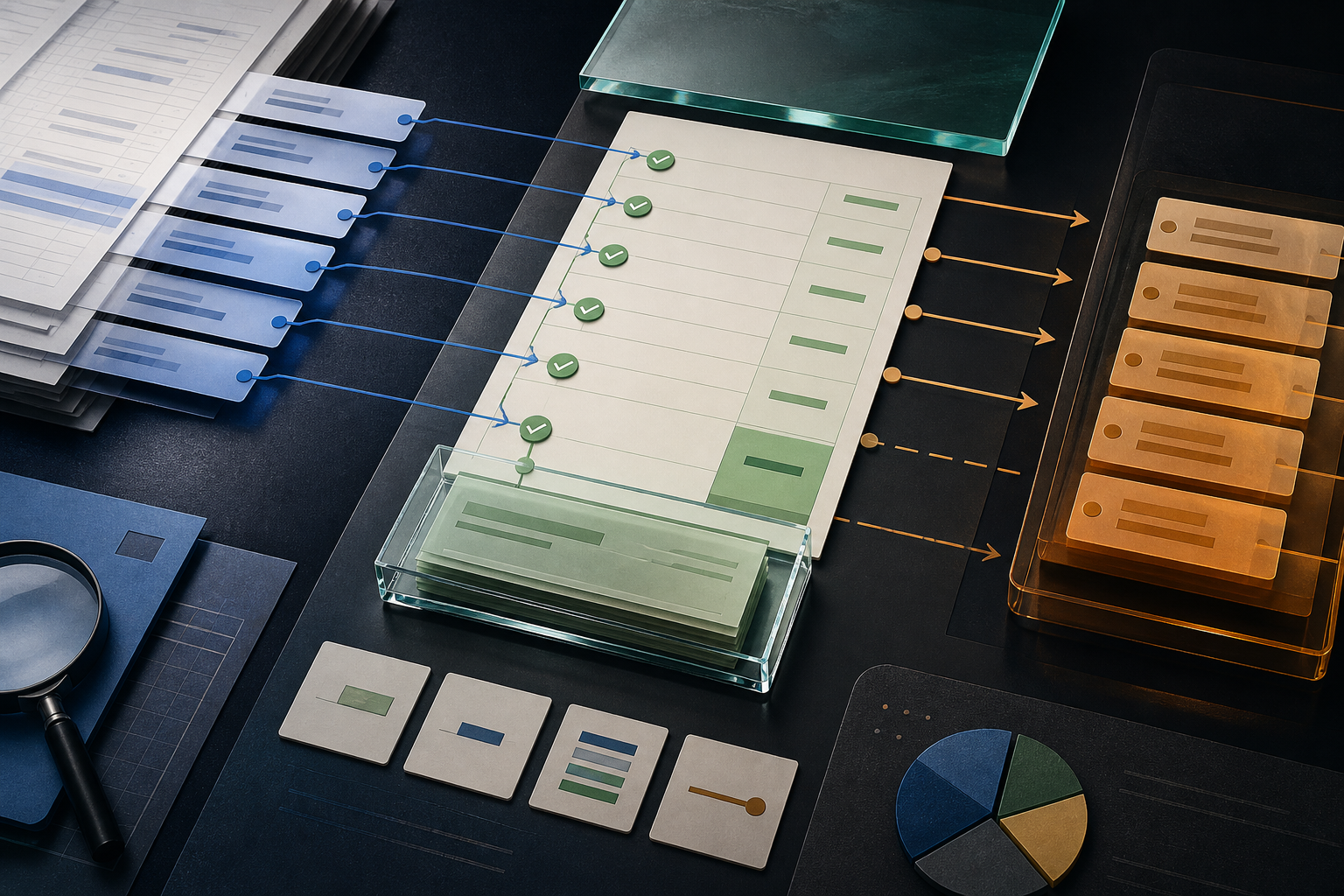
Research question. Across every invoice namespace used by the billing operation, does each released reference identify one document version in its declared context and do duplicate-looking values remain distinguishable? The buyer decision is whether invoice numbering and retrieval controls support outsourced preparation without allowing a support role to invent identifiers, alter statutory sequences, or resolve ambiguous documents by guesswork. This is a prospective research design, not a report of client results. It keeps source facts, calculations, analysis, owner interpretation, and uncertainty distinct so a buyer can see what the proposed evidence would and would not establish.
Why this matters for Outsourced Billing Services. A Philippines-based billing specialist can prepare records, compare approved fields, reproduce documented calculations, maintain an exception queue, and assemble a review packet. Delegation does not transfer authority over contracts, accounting, money movement, customer commitments, privacy, legal positions, access administration, or final release. The research tests whether daily records preserve that line. The role boundary matters because locating and comparing identifiers is support work, while changing a sequence or document reference may have statutory and customer consequences.
Unit of analysis. Use one invoice reference observed in one issuer, system, series, period, document state, and version context. Assign a stable, privacy-safe identifier and preserve each corrected, reopened, cancelled, or superseded version. Do not combine events, accounts, invoices, people, and balances in one denominator. If the operation aggregates records, retain the member list or document why a lower level is unavailable.
Population and cutoff. Include all invoice identifiers created, imported, released, voided, cancelled, corrected, migrated, or exposed to customers in the selected period, including drafts, credit documents, entity-specific series, year resets, reused legacy values, truncated exports, manual entries, and inaccessible records. Before inspecting results, freeze the observation window, timezone, systems, extraction versions, query or report names, filters, duplicate rule, and cutoff. Keep inaccessible records in the denominator with an access state. Record later arrivals and decisions in a movement schedule instead of rewriting the opening population.
Evidence model. Capture invoice identifier exactly as stored and displayed; issuer and entity; system and namespace; series or prefix; sequence source; creation and release times; document type and version; customer account; migration key; void or cancellation event; replacement link; export representation; preparer; approver; and retrieval result. Store sensitive source material only in approved systems. The research table should use permitted locators and the minimum fields needed to reproduce a finding. Label every value source-observed, externally reported, calculated, owner-interpreted, or unknown, and retain the original value beside any normalized value.
Classification. Use declared states such as unique in context, duplicate across valid namespaces, collision candidate, reused after void, sequence gap, format transformation, truncation, migration alias, replacement linked, wrong-document retrieval, release blocked, approved exception, inaccessible, and unresolved. Define the states before outcome review and keep examples for boundary cases. A status label does not prove its own meaning. Approved, complete, posted, or released requires a linked actor, time, scope, version, and source event. Conflicts remain visible until the authorized owner resolves them.
Method. Start from the frozen population, preserve extraction evidence, normalize identifiers and timestamps in separate fields, and link each unit upstream to its source and downstream to its disposition. Apply the written states without changing the rule to improve the result. Count unknowns, late movements, exclusions, access blocks, owner-pending work, and resolved work alongside ordinary completions. This study needs a namespace map rather than a monetary reconciliation: issuer, system, series, document type, and period establish the context in which uniqueness is tested.
Reproducibility tests. preserve identifiers as strings; define each namespace before duplicate testing; compare exact and normalized values; inspect leading zeros, punctuation, resets, and prefixes; retrieve samples from customer-facing and internal systems; trace voids and replacements; reconcile issued counts to sequence events without assuming every gap is an error; and independently review every collision candidate. The second reviewer must use the same source locators and written rules, not the first reviewer's conclusion. Record the initial classification, disagreement, evidence consulted, owner adjudication when required, and final rule clarification. A rule changed after results are visible should be labeled exploratory and rerun across the frozen population.
Measures. Publish the full population, source-linked units, complete required-field units, conflicts, duplicates, inaccessible records, owner-pending items, resolved items, and unresolved items. Show numerator and denominator with every rate. For elapsed time, define the exact starting and ending events and disclose the count with both timestamps. Use a median and a stated upper percentile instead of an average alone. Useful measures include exact collisions, normalized collisions, ambiguous retrievals, lost prefixes, migration aliases, sequence gaps by reason, and unresolved namespace ownership.
Facts, analysis, and inference. Facts are preserved values, identifiers, versions, statements, actors, and timestamps. Calculations include joins, intervals, formulas, and reconciliations. Analysis applies the declared classification. Inference proposes a possible explanation. Keep each in a separate field. A recurring pattern can support another test, but it does not establish motive, fault, or cause. An apparent duplicate may be caused by export truncation, a valid entity namespace, migration reuse, or a real issuance defect; those explanations remain hypotheses until retrieval evidence distinguishes them.
Interpretation. The same visible number can be valid in different declared namespaces, while two differently formatted strings can retrieve the same document. Uniqueness, continuity, retrieval accuracy, regulatory requirements, and customer clarity should be reported separately. Comparisons across periods or teams require reasonably consistent population rules, authority, systems, cutoff, and source availability. Segment results when those conditions change. Do not turn a queue measure into an individual score when source quality, permissions, owner response, or downstream systems sit outside the specialist's control.
Uncertainty. Unknown is a valid result when a source, version, identity, timestamp, authority, rule, or final disposition cannot be established. Name whether the cause is missing evidence, denied access, conflicting records, undefined instructions, system retention, or an owner decision still pending. Never substitute a current screen for historical evidence or choose the value that makes a total reconcile. An unknown namespace is not a harmless missing field because it prevents the reviewer from deciding whether two visible values identify one document or two.
Access and auditability. Grant only the access needed for the assigned preparation step. Keep approval, release, balance change, money movement, and permission administration separate where the buyer's control design requires it. Review access when duties change. Protect logs and evidence from unnecessary alteration, and retain them under the buyer's approved policy and applicable requirements. Preparers need search and audit evidence but should not receive sequence-administration or document-voiding permissions merely to investigate a collision.
Decision use. The findings can show whether work stops at intake, mapping, source access, calculation, exception instructions, reviewer capacity, owner judgment, or system completion. A buyer can then narrow the role, improve a required field, adjust a review cadence, or fix a source handoff. The study cannot show that outsourcing caused a pattern or guarantee that staffing will correct it. The buyer can use the findings to preserve prefixes in exports, improve composite keys, or route ambiguous remittances without authorizing renumbering through the research queue.
Limitations. Jurisdictional invoicing rules, entity policy, legacy migrations, offline issuance, third-party portals, formatting, truncation, sequence reservation, test environments, and missing audit history may limit conclusions. This study cannot define a legally compliant sequence, authorize renumbering, void documents, or decide tax treatment. Non-random missing records, mutable reports, local procedures, short observation windows, and incomplete retention also restrict generalization. Outsourced Billing Services does not claim to have conducted this study for a client, achieved a measured result, or guaranteed an operational or financial outcome.
Niche conclusion. The useful outsourcing question is not whether a queue can be made to look complete. It is whether another authorized person can reproduce the prepared work, see unresolved evidence, and make the reserved decision from a controlled record. This design gives a buyer a practical way to test that condition before expanding scope or access. The concluding question is whether the reference remains unambiguous at every retrieval point used by billing staff and customers, not whether a database column happens to be unique.
Namespace analysis. Treat an invoice number as a composite key until evidence shows it is globally unique. Candidate components include issuer, legal entity, system, document type, series, fiscal period, environment, and version. Produce both an exact-value frequency table and a normalized-value table that removes presentation characters only for analysis. Never replace the stored reference with the normalized form. A value such as 000417 may be valid in two entity series, while INV-417 and INV417 may resolve to one document after an export transformation. Test search screens, PDFs, API responses, payment remittances, and customer portals because a control can succeed in the ledger yet fail at the place a customer or cash team tries to retrieve the invoice.
Collision scenario. Consider a migration that imports a legacy invoice numbered 1042 after the new platform already issued 1042 under a different series whose prefix is omitted from a remittance export. The research should preserve both documents, their namespaces, migration keys, customers, amounts, issue dates, and retrieval behavior. It should test whether a payment reference can reach the wrong invoice and whether staff see enough context to stop. A sequence gap created by a void is a separate question from a collision, and a collision candidate is not authority to renumber either document. The useful finding identifies where contextual fields disappear and which authorized system owner must decide the correction.
Source method. We reviewed the publisher pages below on October 2, 2026. They supply control, security, privacy, logging, or accounting context, not performance data about Outsourced Billing Services or a client. Their application depends on the buyer's facts and should be assessed by qualified accounting, legal, privacy, security, tax, or compliance owners when needed.
Standards for Internal Control in the Federal Government: 2025 Revision. U.S. Government Accountability Office. https://www.gao.gov/greenbook. Checked October 2, 2026. Used for quality information, control activities, segregation of duties, and monitoring.
Security and Privacy Controls for Information Systems and Organizations, SP 800-53 Revision 5. National Institute of Standards and Technology. https://csrc.nist.gov/pubs/sp/800/53/r5/upd1/final. Checked October 2, 2026. Used for audit records, controlled change, least privilege, and information integrity.
Use Logging on Business Systems. Cybersecurity and Infrastructure Security Agency. https://www.cisa.gov/audiences/small-and-medium-businesses/secure-your-business/use-logging-on-business-systems. Checked October 2, 2026. Used for useful event records, centralized logging, protected log access, and retention.
Protecting Personal Information: A Guide for Business. U.S. Federal Trade Commission. https://www.ftc.gov/business-guidance/resources/protecting-personal-information-guide-business. Checked October 2, 2026. Used for data inventory, limited access, secure handling, service-provider oversight, and disposal.