
Philippines staffing research
Billing Hold Release Research: What Evidence Changed Before Work Resumed?
A state-transition study of hold reasons, scope, effective times, prerequisites, owner decisions, resumed work, and downstream consequences.
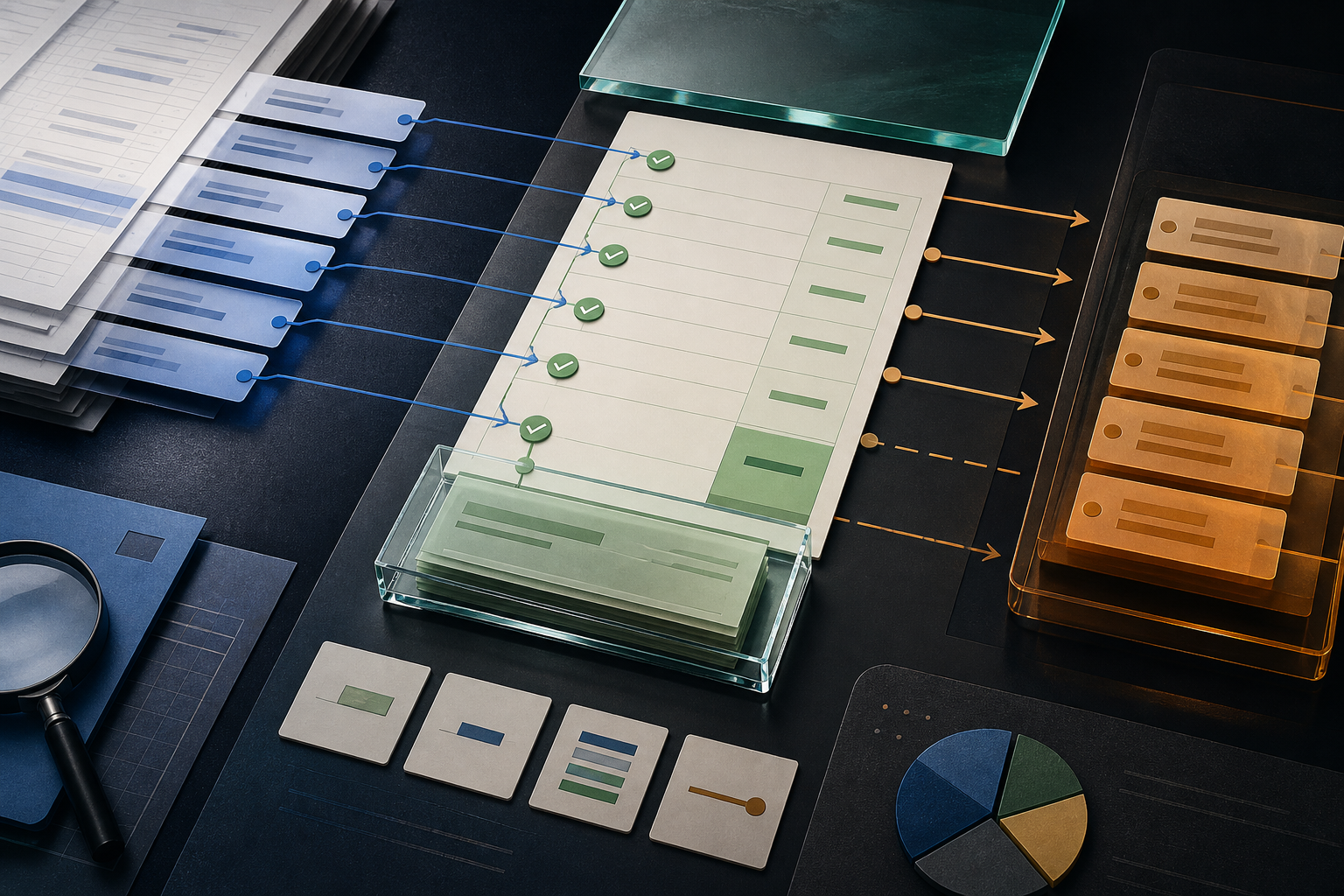
Research question. For every billing hold that was released, can a reviewer reconstruct the original reason and scope, evidence reviewed, prerequisite satisfied, authorized decision, effective time, and work that subsequently resumed? The buyer decision is whether billing support can maintain hold evidence and prepare release packets without acquiring authority to remove restrictions, resume collection, issue invoices, or alter balances. This is a prospective research design, not a report of client results. It keeps source facts, calculations, analysis, owner interpretation, and uncertainty distinct so a buyer can see what the proposed evidence would and would not establish.
Why this matters for Outsourced Billing Services. A Philippines-based billing specialist can prepare records, compare approved fields, reproduce documented calculations, maintain an exception queue, and assemble a review packet. Delegation does not transfer authority over contracts, accounting, money movement, customer commitments, privacy, legal positions, access administration, or final release. The research tests whether daily records preserve that line. Maintaining a hold register and assembling prerequisite evidence are support activities; removing the constraint or resuming billing requires the named owner and system event.
Unit of analysis. Use one hold version applied to one account, invoice, charge population, workflow stage, or communication scope and linked to one retained, narrowed, expanded, or released outcome. Assign a stable, privacy-safe identifier and preserve each corrected, reopened, cancelled, or superseded version. Do not combine events, accounts, invoices, people, and balances in one denominator. If the operation aggregates records, retain the member list or document why a lower level is unavailable.
Population and cutoff. Include all holds active, created, changed, expired, or released during the window, including dispute, compliance, credit, data-quality, contract, tax, security, customer-requested, technical, partial-scope, inherited, duplicate, inaccessible, and unresolved holds. Before inspecting results, freeze the observation window, timezone, systems, extraction versions, query or report names, filters, duplicate rule, and cutoff. Keep inaccessible records in the denominator with an access state. Record later arrivals and decisions in a movement schedule instead of rewriting the opening population.
Evidence model. Capture hold identifier and version; account and affected records; reason source; scope; created and effective times; initiating owner; prerequisites; review date; source evidence supplied; conflicting evidence; release request; decision owner; approval event; effective release time; resumed queue events; customer communication restriction; exception; and closure review. Store sensitive source material only in approved systems. The research table should use permitted locators and the minimum fields needed to reproduce a finding. Label every value source-observed, externally reported, calculated, owner-interpreted, or unknown, and retain the original value beside any normalized value.
Classification. Use declared states such as active supported, scope unclear, prerequisite open, prerequisite evidenced, conflicting evidence, owner review pending, retained, narrowed, expanded, release approved, release rejected, released effective, premature-resumption candidate, downstream resumed, inaccessible, and unresolved. Define the states before outcome review and keep examples for boundary cases. A status label does not prove its own meaning. Approved, complete, posted, or released requires a linked actor, time, scope, version, and source event. Conflicts remain visible until the authorized owner resolves them.
Method. Start from the frozen population, preserve extraction evidence, normalize identifiers and timestamps in separate fields, and link each unit upstream to its source and downstream to its disposition. Apply the written states without changing the rule to improve the result. Count unknowns, late movements, exclusions, access blocks, owner-pending work, and resolved work alongside ordinary completions. The study should use a time-ordered state machine whose edges show apply, narrow, expand, retain, approve-release, effective-release, and downstream-resumption events.
Reproducibility tests. reconstruct state immediately before release; compare release evidence with declared prerequisites; preserve reason and scope versions; inspect automatic expiry separately from affirmative approval; identify work occurring while a hold remained effective; trace released items into downstream queues; sample retained holds for asymmetry; reconcile opening holds plus changes to closing holds; and second-review every premature-resumption candidate. The second reviewer must use the same source locators and written rules, not the first reviewer's conclusion. Record the initial classification, disagreement, evidence consulted, owner adjudication when required, and final rule clarification. A rule changed after results are visible should be labeled exploratory and rerun across the frozen population.
Measures. Publish the full population, source-linked units, complete required-field units, conflicts, duplicates, inaccessible records, owner-pending items, resolved items, and unresolved items. Show numerator and denominator with every rate. For elapsed time, define the exact starting and ending events and disclose the count with both timestamps. Use a median and a stated upper percentile instead of an average alone. Measures should show holds by scope and reason, prerequisites still open, decisions pending, release-to-resumption time, premature-resumption candidates, and scope-translation mismatches.
Facts, analysis, and inference. Facts are preserved values, identifiers, versions, statements, actors, and timestamps. Calculations include joins, intervals, formulas, and reconciliations. Analysis applies the declared classification. Inference proposes a possible explanation. Keep each in a separate field. A recurring pattern can support another test, but it does not establish motive, fault, or cause. A long hold may suggest missing evidence, unclear prerequisites, unavailable owners, or deliberate restriction; elapsed time alone cannot determine which explanation is correct.
Interpretation. An elapsed review date is not release authority, and a completed prerequisite does not itself remove a hold. Conversely, a released hold does not prove that every downstream action is appropriate. Evidence readiness, owner decision, effective state, and resumed work are separate observations. Comparisons across periods or teams require reasonably consistent population rules, authority, systems, cutoff, and source availability. Segment results when those conditions change. Do not turn a queue measure into an individual score when source quality, permissions, owner response, or downstream systems sit outside the specialist's control.
Uncertainty. Unknown is a valid result when a source, version, identity, timestamp, authority, rule, or final disposition cannot be established. Name whether the cause is missing evidence, denied access, conflicting records, undefined instructions, system retention, or an owner decision still pending. Never substitute a current screen for historical evidence or choose the value that makes a total reconcile. When the release event or its scope cannot be established, the item remains unknown even if downstream work appears to have resumed.
Access and auditability. Grant only the access needed for the assigned preparation step. Keep approval, release, balance change, money movement, and permission administration separate where the buyer's control design requires it. Review access when duties change. Protect logs and evidence from unnecessary alteration, and retain them under the buyer's approved policy and applicable requirements. Read access to hold versions and prerequisites does not justify permission to clear flags, change customer restrictions, issue invoices, or restart collections.
Decision use. The findings can show whether work stops at intake, mapping, source access, calculation, exception instructions, reviewer capacity, owner judgment, or system completion. A buyer can then narrow the role, improve a required field, adjust a review cadence, or fix a source handoff. The study cannot show that outsourcing caused a pattern or guarantee that staffing will correct it. The buyer can use findings to clarify prerequisites, synchronize flags, tighten scope translation, or improve release routing while keeping the underlying dispute or compliance decision outside the support role.
Limitations. Hold terminology, system synchronization, legal or compliance restrictions, contract disputes, credit policy, privacy, owner availability, automatic expiration, partial scope, and incomplete state history constrain reconstruction. The study cannot remove a hold, determine liability, approve billing or collection, or provide legal or compliance conclusions. Non-random missing records, mutable reports, local procedures, short observation windows, and incomplete retention also restrict generalization. Outsourced Billing Services does not claim to have conducted this study for a client, achieved a measured result, or guaranteed an operational or financial outcome.
Niche conclusion. The useful outsourcing question is not whether a queue can be made to look complete. It is whether another authorized person can reproduce the prepared work, see unresolved evidence, and make the reserved decision from a controlled record. This design gives a buyer a practical way to test that condition before expanding scope or access. The conclusion should show that resumed work followed a scoped, effective, attributable release rather than assuming activity itself proves permission.
State-transition analysis. Model holds as versioned constraints rather than a yes-or-no account flag. One account can have an invoice hold, communication hold, collection hold, or narrow line-level hold with different owners and prerequisites. Record applied time, effective time, scope, reason source, next review, and supersession for every version. Before calling a release timely or late, reconstruct what the queue actually knew and when. A document uploaded after approval should not be presented as evidence the approver used. Conversely, evidence can satisfy a prerequisite before the authorized release event occurs. This chronology reveals synchronization gaps without allowing the researcher to infer permission from elapsed time.
Resumption scenario. Imagine a dispute hold covering one invoice while a system-level flag suppresses every invoice for the account. An owner resolves the disputed line and approves release only for the affected invoice, but an integration clears the account-wide flag and sends three other drafts. The study should compare requested scope, approved scope, system change, release timestamps, delivery events, and later correction. It should classify the additional invoices as potential premature resumptions without deciding their validity or contacting the customer. This makes the operational defect precise: the problem may sit in scope translation rather than in the owner decision or the preparation work.
Source method. We reviewed the publisher pages below on October 2, 2026. They supply control, security, privacy, logging, or accounting context, not performance data about Outsourced Billing Services or a client. Their application depends on the buyer's facts and should be assessed by qualified accounting, legal, privacy, security, tax, or compliance owners when needed.
Standards for Internal Control in the Federal Government: 2025 Revision. U.S. Government Accountability Office. https://www.gao.gov/greenbook. Checked October 2, 2026. Used for quality information, control activities, segregation of duties, and monitoring.
Security and Privacy Controls for Information Systems and Organizations, SP 800-53 Revision 5. National Institute of Standards and Technology. https://csrc.nist.gov/pubs/sp/800/53/r5/upd1/final. Checked October 2, 2026. Used for audit records, controlled change, least privilege, and information integrity.
Protecting Personal Information: A Guide for Business. U.S. Federal Trade Commission. https://www.ftc.gov/business-guidance/resources/protecting-personal-information-guide-business. Checked October 2, 2026. Used for data inventory, limited access, secure handling, service-provider oversight, and disposal.
Use Logging on Business Systems. Cybersecurity and Infrastructure Security Agency. https://www.cisa.gov/audiences/small-and-medium-businesses/secure-your-business/use-logging-on-business-systems. Checked October 2, 2026. Used for useful event records, centralized logging, protected log access, and retention.