
Philippines staffing research
Dispute Hold Synchronization Research: Do Billing and Collections Share the Same State?
A cross-system state study comparing dispute scope, collection restrictions, invoice flags, owner decisions, effective times, and resumed activity.
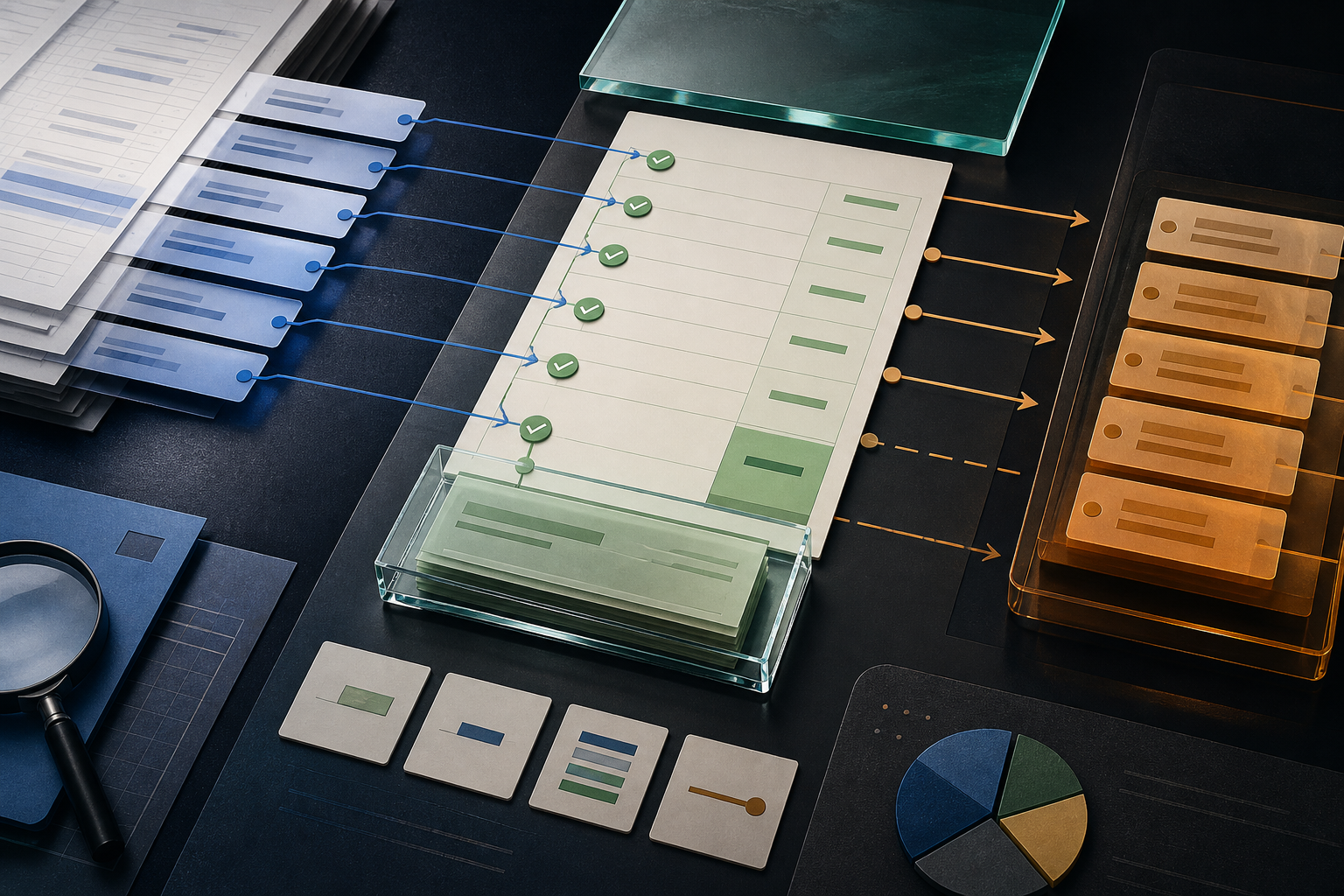
A dispute hold is not one status. It is a scoped instruction represented in several systems at different times. Billing may show an invoice flag, collections may suppress contact at account level, support may carry a case status, and a workflow tool may wait for an owner. Matching current screens cannot prove those systems agreed when an invoice or customer contact occurred.
This research replays hold state at meaningful events. It asks whether invoice, account, collections, support, and workflow records expressed the approved scope at the time work was performed. The result informs handoff and synchronization design; it does not decide whether a dispute is valid, impose a hold, release one, concede an amount, or determine collection strategy.
Use one dispute version with one declared scope as the unit. Scope may be a line, invoice, group of invoices, account, service, or another client-defined object. Preserve every expansion, narrowing, resolution, and reopen as a new version rather than replacing the earlier instruction.
Include disputes opened, changed, resolved, closed, and reopened during the window, plus billing and collection events touching their scope. Add partial disputes, inherited account flags, missing or delayed sync messages, inaccessible systems, and unresolved scope. Freeze the observation cutoff and normalize system timestamps without discarding their original zones.
Construct the approved instruction timeline first: source wording, affected customer and documents, amount and currency, requested restriction, owner, approval, effective time, duration, release condition, and later versions. Customer wording and approved operational restriction are separate evidence; one does not automatically establish the other.
Then construct each system timeline independently. Capture flag value, representable scope, change time, observed time, actor or integration, response, retry, and audit locator. A system may only support account-level holds even when the approved scope is one invoice. Record that limitation instead of describing the states as equal.
The central instrument is a time-indexed matrix. Rows represent dispute versions and selected event times; columns represent the source instruction and each operational system. Replay the matrix when the hold becomes effective, when a draft or release occurs, when contact is attempted, when the dispute changes, when release is approved, and when activity resumes.
Consider a customer disputing one $2,000 line on a $12,000 invoice while acknowledging the remainder. The billing tool supports line flags, but collections accepts only an invoice-level suppression. Support records an account-wide case. The matrix shows three scopes. Research reports the translation problem and affected activity; an owner decides whether the broader controls are intentional compensating measures.
Timing gaps need an ordered explanation. Separate owner approval delay, queue delay, interface transmission, system processing, failed retries, and later observation. The first unsupported transition is more useful than assigning fault from elapsed time. Preserve activity during the interval, including messages generated but stopped before delivery.
Test both restrictions and releases. A stale hold can suppress permitted work after resolution; a premature release can permit contact or billing before authorization. Verify that the release decision refers to the exact dispute version and scope, then trace propagation before considering resumed activity aligned.
Reopens are new control events. They should not simply restore whatever flags happened to exist before closure. Capture the new evidence, owner decision, effective time, scope, and propagation. Search for activity between reopen effectiveness and system acknowledgment.
Classify results as aligned at event time, scope mismatch, timing lag, missing flag, overbroad restriction, stale restriction, billing active during approved hold, collections active during approved hold, release approved but unpropagated, resumed before release, inaccessible history, approved exception, corrected, or unresolved.
Current-state sampling creates false reassurance. Include historic events and retain snapshots or logs sufficient to replay them. When a system lacks history, report that the event cannot be verified. Do not substitute today’s aligned status for past evidence.
Measure approval-to-propagation time separately for each system, release-to-clearing time, activity during gaps, stale holds, missing scope, and reopens. Report denominators with complete timestamps. Segment by representable scope and integration path, because manual and automated propagation have different evidence.
Protect the dispute details. The research table should use protected locators and the minimum necessary facts. Roles preparing billing or collection queues do not automatically need sensitive correspondence, legal analysis, or access-administration rights. Retain logs under the client’s policy.
A second reviewer replays selected cases from original instructions and audit events. They should not receive a prefilled conclusion matrix. Record classification differences, source conflicts, and owner adjudication. If a scope translation rule changes, rerun it against the frozen population.
Interface acknowledgments should be tested as evidence, not assumed to mean alignment. A queue may confirm message receipt before applying the flag, reject a field while accepting the envelope, or process events out of order. Preserve message identifiers, payload version, response, retry sequence, and the later state observation. Distinguish transport success from successful operational state change.
Manual compensating controls need the same scope discipline. If an integration cannot represent a line-level hold, an approved reviewer may inspect a daily contact queue. Record the population reviewed, cutoff, excluded items, decisions, and evidence that restricted actions were stopped. The existence of a checklist does not prove that every affected record entered it.
Customer communication records can reveal consequences but not define approved state. Link outbound messages, calls, portal notices, and failed sends to the matrix time and disputed scope. Record whether an action was created, approved, transmitted, delivered where evidence exists, or stopped. Do not infer customer receipt from a local sent flag.
Resolution packets should bridge disputed scope to final dispositions. One line may receive a credit, another may remain due, and a third may move to continued investigation. Releasing a broad invoice hold without mapping those components can restart collection on unresolved value. The research tests whether the release instruction and each system representation preserve that distinction.
Monitoring should retain both over-restriction and under-restriction. Teams often focus on contacts made during a hold, while stale or excessively broad holds can also distort aging, suppress legitimate communication, and hide work. Report the two directions separately, with the owner-approved scope as the reference. Neither direction should be labeled harmful without the relevant commercial or legal determination.
Retest a representative restricted event and a representative permitted event after every synchronization correction, and preserve both results with the changed rule or interface version.
The output is a transition report, not a score for individual specialists. It distinguishes approval, translation, propagation, system capability, and resumed work. The buyer can repair integration, create a compensating review, clarify scope rules, or narrow delegated duties without claiming that a timing pattern proves legal or contractual harm.
The study cannot validate the merits of a dispute, provide legal advice, select collection action, waive balances, stop service, or decide customer communication. Its result is whether another authorized person can reconstruct the hold state that should have governed each observed event.
Standards for Internal Control in the Federal Government: 2025 Revision. U.S. Government Accountability Office. https://www.gao.gov/greenbook. Checked October 5, 2026. Used for control activities, quality evidence, segregation, and monitoring.
Security and Privacy Controls for Information Systems and Organizations, SP 800-53 Revision 5. National Institute of Standards and Technology. https://csrc.nist.gov/pubs/sp/800/53/r5/upd1/final. Checked October 5, 2026. Used for audit events, timestamped records, access, and integrity.
Protecting Personal Information: A Guide for Business. U.S. Federal Trade Commission. https://www.ftc.gov/business-guidance/resources/protecting-personal-information-guide-business-0. Checked October 5, 2026. Used for appropriate collection, restricted access, and secure service-provider operations.