
Philippines staffing research
Billing Interface Drift Research: Did the File Change Before the Import Failed?
A version-aware study of headers, field types, required values, keys, counts, totals, and source-to-import transformations.
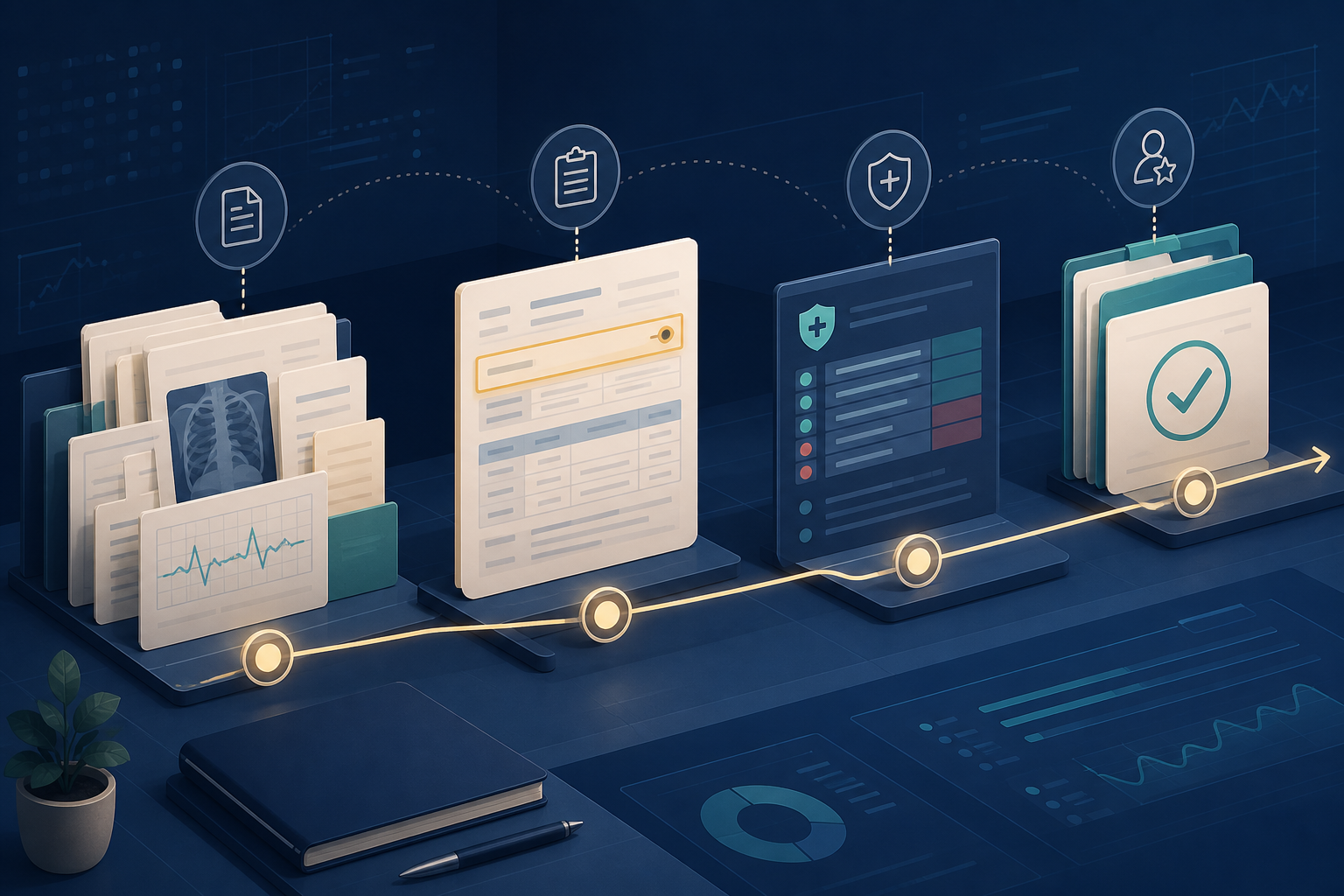
Research question. Across accepted and rejected billing interface files, can the team detect when structure or field behavior changed and connect that change to a documented source version rather than repairing rows invisibly? The buyer decision is whether data-quality support can identify and route schema drift before production import while system and billing owners control transformations and release. This is a prospective research design, not a report of client results. It keeps source facts, calculations, analysis, owner interpretation, and uncertainty distinct so a buyer can see what the proposed evidence would and would not establish.
Why this matters for Outsourced Billing Services. A Philippines-based billing specialist can prepare records, compare approved fields, reproduce documented calculations, maintain an exception queue, and assemble a review packet. Delegation does not transfer authority over contracts, accounting, money movement, customer commitments, privacy, legal positions, access administration, or final release. The research tests whether daily records preserve that line.
Unit of analysis. Use one received file version evaluated against one declared interface specification and one intended import run. Assign a stable, privacy-safe identifier and preserve each corrected, reopened, cancelled, or superseded version. Do not combine events, accounts, invoices, people, and balances in one denominator. If the operation aggregates records, retain the member list or document why a lower level is unavailable.
Population and cutoff. Include all files received in the window, including accepted, rejected, corrected, resent, empty, partial, duplicate, late, schema-changed, encoding-changed, encrypted, inaccessible, and manually altered candidates. Before inspecting results, freeze the observation window, timezone, systems, extraction versions, query or report names, filters, duplicate rule, and cutoff. Keep inaccessible records in the denominator with an access state. Record later arrivals and decisions in a movement schedule instead of rewriting the opening population.
Evidence model. Capture source and interface; file name and cryptographic hash; extract and receipt times; specification version; header order; field names and types; encoding; row count; control totals; required-field results; duplicate-key results; transformation log; rejection output; reviewer; and disposition. Store sensitive source material only in approved systems. The research table should use permitted locators and the minimum fields needed to reproduce a finding. Label every value source-observed, externally reported, calculated, owner-interpreted, or unknown, and retain the original value beside any normalized value.
Classification. Use declared states such as specification match, additive field, removed field, renamed field, type drift, length drift, encoding drift, missing required values, duplicate keys, control-total variance, duplicate file, superseded, owner decision required, and unresolved. Define the states before outcome review and keep examples for boundary cases. A status label does not prove its own meaning. Approved, complete, posted, or released requires a linked actor, time, scope, version, and source event. Conflicts remain visible until the authorized owner resolves them.
Method. Start from the frozen population, preserve extraction evidence, normalize identifiers and timestamps in separate fields, and link each unit upstream to its source and downstream to its disposition. Apply the written states without changing the rule to improve the result. Count unknowns, late movements, exclusions, access blocks, owner-pending work, and resolved work alongside ordinary completions.
Reproducibility tests. hash untouched inputs; compare structure to the approved version; profile types and lengths without rewriting; reconcile row counts and totals through transformations; test keys as strings; compare rejected and corrected files; inspect effective dates for specification changes; and independently reproduce drift classifications. The second reviewer must use the same source locators and written rules, not the first reviewer's conclusion. Record the initial classification, disagreement, evidence consulted, owner adjudication when required, and final rule clarification. A rule changed after results are visible should be labeled exploratory and rerun across the frozen population.
Measures. Publish the full population, source-linked units, complete required-field units, conflicts, duplicates, inaccessible records, owner-pending items, resolved items, and unresolved items. Show numerator and denominator with every rate. For elapsed time, define the exact starting and ending events and disclose the count with both timestamps. Use a median and a stated upper percentile instead of an average alone.
Facts, analysis, and inference. Facts are preserved values, identifiers, versions, statements, actors, and timestamps. Calculations include joins, intervals, formulas, and reconciliations. Analysis applies the declared classification. Inference proposes a possible explanation. Keep each in a separate field. A recurring pattern can support another test, but it does not establish motive, fault, or cause.
Interpretation. A changed header or type is evidence of structural difference, not proof that the source or target is wrong. A successful import also does not prove semantic correctness if fields were mapped to the wrong meaning. Comparisons across periods or teams require reasonably consistent population rules, authority, systems, cutoff, and source availability. Segment results when those conditions change. Do not turn a queue measure into an individual score when source quality, permissions, owner response, or downstream systems sit outside the specialist's control.
Uncertainty. Unknown is a valid result when a source, version, identity, timestamp, authority, rule, or final disposition cannot be established. Name whether the cause is missing evidence, denied access, conflicting records, undefined instructions, system retention, or an owner decision still pending. Never substitute a current screen for historical evidence or choose the value that makes a total reconcile.
Access and auditability. Grant only the access needed for the assigned preparation step. Keep approval, release, balance change, money movement, and permission administration separate where the buyer's control design requires it. Review access when duties change. Protect logs and evidence from unnecessary alteration, and retain them under the buyer's approved policy and applicable requirements.
Decision use. The findings can show whether work stops at intake, mapping, source access, calculation, exception instructions, reviewer capacity, owner judgment, or system completion. A buyer can then narrow the role, improve a required field, adjust a review cadence, or fix a source handoff. The study cannot show that outsourcing caused a pattern or guarantee that staffing will correct it.
Limitations. Undocumented source releases, export-tool behavior, encodings, encryption, compression, transformations, target-system tolerance, sampled data, and access restrictions limit detection. The study cannot authorize production imports, change source records, select accounting treatment, or approve security exceptions. Non-random missing records, mutable reports, local procedures, short observation windows, and incomplete retention also restrict generalization. Outsourced Billing Services does not claim to have conducted this study for a client, achieved a measured result, or guaranteed an operational or financial outcome.
Niche conclusion. The useful outsourcing question is not whether a queue can be made to look complete. It is whether another authorized person can reproduce the prepared work, see unresolved evidence, and make the reserved decision from a controlled record. This design gives a buyer a practical way to test that condition before expanding scope or access.
Source method. We reviewed the publisher pages below on September 25, 2026. They supply control, security, privacy, logging, or accounting context, not performance data about Outsourced Billing Services or a client. Their application depends on the buyer's facts and should be assessed by qualified accounting, legal, privacy, security, tax, or compliance owners when needed.
Security and Privacy Controls for Information Systems and Organizations, SP 800-53 Revision 5. National Institute of Standards and Technology. https://csrc.nist.gov/pubs/sp/800/53/r5/upd1/final. Checked September 25, 2026. Used for least privilege, audit records, information integrity, system contingency, and controlled change.
Summary of the HIPAA Security Rule. U.S. Department of Health and Human Services. https://www.hhs.gov/hipaa/for-professionals/security/laws-regulations/index.html. Checked September 25, 2026. Used for access authorization, integrity, availability, contingency planning, and documentation context.
Medicare Claims Processing Manual. Centers for Medicare & Medicaid Services. https://www.cms.gov/regulations-and-guidance/guidance/manuals/internet-only-manuals-ioms-items/cms018912. Checked September 25, 2026. Used for primary Medicare claims-processing context while payer-specific instructions control each case.